

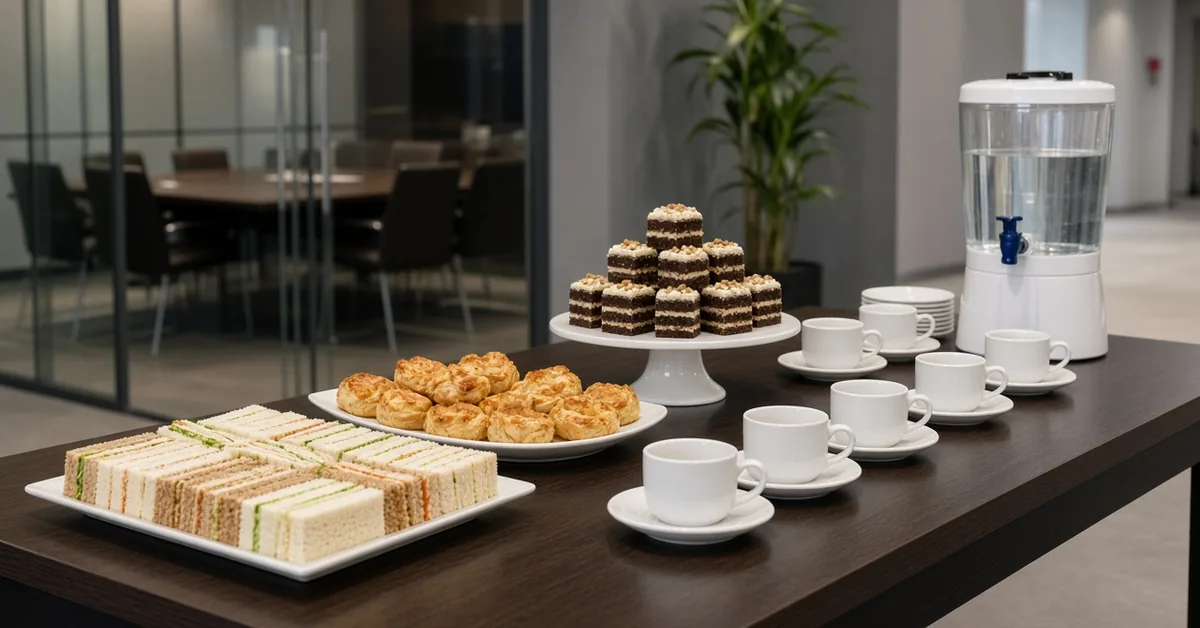
For a 20-minute tea break, a practical starting point is three small food portions and one drink per guest, with plain water available separately. Think of a finger sandwich, a savoury bite and a small sweet. Consider a fourth small piece when the break falls well between meals and guests are likely to be hungry.
The food must also be quick to collect and comfortable to handle. At a Singapore seminar or training session, walking out, queuing and returning to seats all reduce the time available for refreshments.
Work backwards from the restart time
A short break needs a serving plan as much as a menu. This illustrative schedule shows how quickly the available time disappears:
| Time within the break | Activity |
|---|---|
| Minutes 0–3 | Leave the session room and reach the refreshments |
| Minutes 3–7 | Collect food and drinks |
| Minutes 7–16 | Eat, drink and chat |
| Minutes 16–20 | Clear plates and return to seats |
That leaves around nine minutes for eating in this example. Guests visiting the washroom may have less.
Check the actual route before booking. A buffet on another floor or beyond a crowded lift lobby can make the schedule unrealistic. Where possible, position refreshments close to the meeting room and announce the restart time before releasing guests.
Match the quantity to the portion size
Three small pieces can mean very different amounts of food. A sandwich triangle, a miniature pastry and a small brownie are a lighter combination than a whole filled roll, a large savoury pastry and a full slice of cake.
Ask the caterer about actual serving sizes before calculating quantities. If lunch follows soon afterwards, discuss a lighter allocation. If guests ate several hours earlier, include a more substantial sandwich portion or an additional savoury.
For an illustrative group of 50 guests, three small pieces each means 150 pieces overall. That could be 50 sandwich portions, 50 savouries and 50 sweets. Dietary substitutions should be included within the headcount, with any additional allowance agreed separately. Count speakers, facilitators and event staff who will also take refreshments, so their portions do not come out of the guest allocation.
If the break effectively replaces lunch, review the agenda and meal provision. Increasing the food quantity alone will not create enough time to eat it comfortably.
Choose foods that fit comfortably on one plate
Rasa Catering’s hi-tea catering menu includes mini curry puffs, vegetable samosas, egg mayo and chicken mayo finger sandwiches, and brownies. These offer useful starting points for a short-break shortlist, subject to confirming their portion sizes.
An illustrative plate could contain one finger sandwich portion, one mini curry puff and one small brownie. This is a suggested combination for an individual guest, not a separate advertised package.
Choose pieces that hold together when lifted and do not require cutting. Keep sauces optional and easy to collect without balancing another container. Avoid filling every space on the plate; guests still need room to move food around while holding a cup.
Ask whether sandwiches arrive already cut and whether sweets need slicing on site. Cutting or assembling food during the break creates a service delay. Any portioning should be completed by the catering team before guests arrive, with food held appropriately until service.
Bone-in snacks and large, heavily filled breads need more handling. Spoon desserts also introduce an extra bowl and utensil. Rasa’s menu includes honeydew sago and chilled cheng teng; if choosing either, provide somewhere guests can set down their drinks.

Separate menu variety from food quantity
A package’s number of selections tells you how many choices are offered. Confirm the quantity supplied for each choice separately.
Rasa’s entry hi-tea package lists two savoury selections, two sandwich selections, three sweet selections and two beverages. Guests do not need to sample every item during one short break.
When reviewing the package, ask how portions are allocated across those selections. Avoid assuming that a wider menu automatically means a better fit for 20 minutes. A clear arrangement of dishes helps guests choose quickly even when several options are available.
For an event with multiple sessions and meals, compare the meeting packages alongside the standalone tea-break menu.
Keep drinks simple and easy to finish
Plan enough beverage volume for an initial serving per guest, then agree a refill allowance based on the group. For example, 50 servings of 200 millilitres require 10 litres in total before any reserve. This is a calculation example; confirm the actual cup size and likely demand.
Coffee and tea are both listed on Rasa’s menu. If selecting those two beverages, confirm how plain water will be provided and whether it carries an additional charge.
Ask for sugar, milk and creamer on the side so guests can choose their preferred drink. Place these additions beyond the dispensing point to keep the queue moving.
Use cups suitable for hot drinks, leave space below the rim and provide stable surfaces nearby. Guests should have time to let a hot drink cool comfortably. A large cup collected just before the next session is unlikely to help.
Design the queue around the guest count
Set a collection-time target before deciding on the layout. If 50 guests need refreshments within five minutes, the setup must accommodate an average of 10 guests per minute across all serving points. That is a planning target, not a guaranteed service rate.
Discuss whether duplicated food stations or additional drink dispensers are needed. Keep food and beverages separate so someone waiting for tea does not block guests collecting sandwiches.
Put plates at the beginning of the food line, labels where people can read them before serving, and bins away from the collection area. Arrange replenishment before trays become empty.
For standing events, provide enough surfaces for plates and cups. Include accessible seating for guests who cannot comfortably eat while standing.
Resolve dietary questions before the break
Collect dietary requirements when confirming attendance and discuss suitable portions with the caterer in advance.
Ask for clear labels based on confirmed recipes, including relevant allergens. A dish name alone does not establish whether it meets a vegetarian, vegan or allergy-related requirement.
Where a guest needs a specially prepared portion, agree to a clearly identified collection point. Otherwise, they may spend much of the break finding someone who can answer questions. Keep serving utensils with their intended dishes and ask how any required separation will be maintained.
FAQs
How much food should each guest receive?
Start with three small pieces, adjusting for portion size and the next meal’s timing.
Which foods are easiest to eat quickly?
Choose finger sandwiches, mini savouries and small sweets that require no cutting.
How many drinks should I plan for?
Allow one initial serving per guest, plus water and an agreed refill allowance.
How can I prevent long queues?
Separate food and drinks, and discuss extra serving points with your caterer.
Is a 20-minute break enough for lunch?
Plan a longer meal break if refreshments need to replace lunch.