

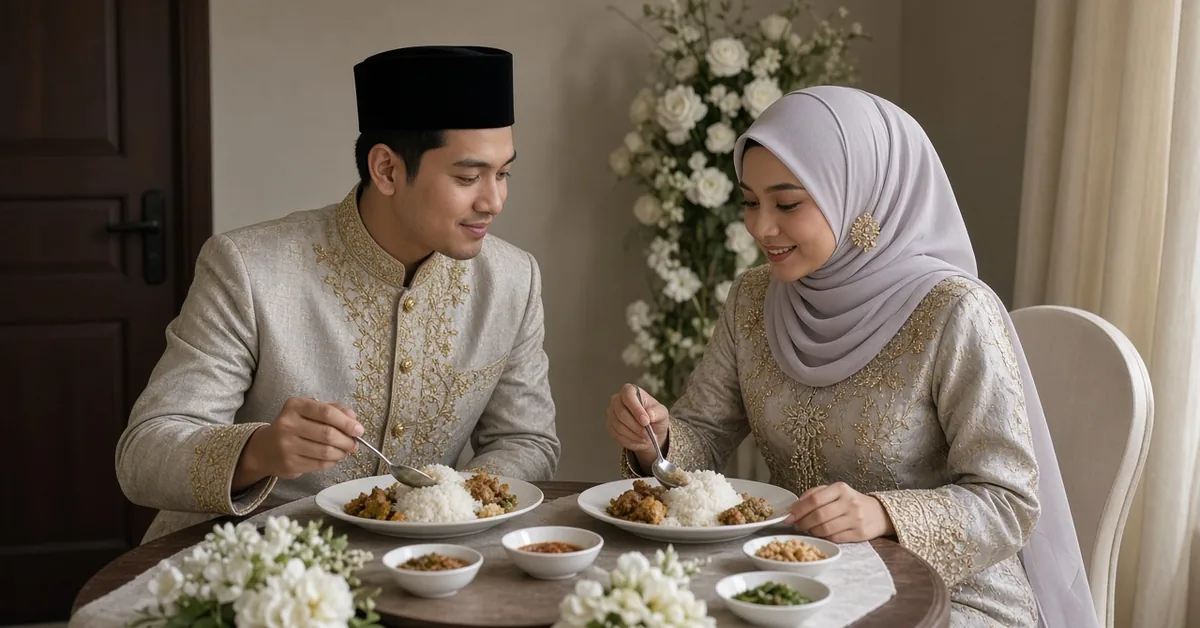
Put the bride and groom’s meal into the wedding programme before filling the remaining gaps with photographs. Choose a specific eating time, agree where the food will be served, and give one person responsibility for protecting that break.
For a wedding in Singapore, the schedule might include a solemnisation, family photographs, a tea ceremony or a change before the next entrance. Whatever your programme includes, the couple’s meal needs enough space for both people to sit down and finish it without being called away.
Set aside a realistic eating window
Start by reserving around 20–30 minutes of seated eating time. Treat this as a planning allowance, then adjust it to your preferences and the service format. Walking to the room, waiting for plates and refreshing makeup require additional time.
Write “Bride and groom’s meal” on the master schedule, with a start time, finish time and location. “Eat during a free moment” leaves everyone guessing.
Build this appointment around commitments that are difficult to move, such as the ceremony or portraits planned for particular daylight conditions. If those commitments clash, decide which optional activity can shift before the programme is finalised.
Eat a familiar breakfast or earlier meal, too. The reception meal should not be your first chance to eat that day.
Agree which photographs come before the meal
Ask the photographer to separate essential photographs in the first outfit from pictures that can happen later. Immediate family portraits may need to happen before a change, while some informal guest photographs can wait.
Give a relative or wedding helper the group list and ask them to gather the next group in advance. Otherwise, several short searches for missing relatives can consume the entire meal break.
Set a clear stopping point. For example, finish the agreed family groups, release the couple to eat, then resume photographs after the next entrance. Tell the photographer whether the meal is private or whether you want a brief photograph before eating.
If outdoor portraits depend on evening light, plan the meal before or after that appointment and confirm that catering service will still be available.
Separate eating from dressing and makeup
A useful sequence is: photographs in the current outfit, meal, outfit change, then final hair and makeup touch-ups. This lets the couple eat before the next lipstick refresh and keeps food away from the next outfit while it is being fitted.
However, check whether the current clothes allow comfortable sitting and eating. If a fitted outfit or elaborate sleeves make that difficult, discuss eating in a robe or comfortable clothes during the change.
Ask the dresser how long the full change requires, including jewellery, headwear, shoes and fastening. A slot marked “30-minute change” should not silently include a 20-minute meal.
Keep drinks and plates away from garments laid out for dressing. A proper table is much easier to manage than balancing a tray beside accessories.
Choose the couple’s food and service arrangement
Review the Rasa Catering wedding menu while planning the timing. Its wedding page lists Malay, Chinese eight-course, North Indian, South Indian and Middle Eastern menu options. Confirm the serving arrangements for your chosen package.
For buffet service, ask whether two portions can be reserved under the catering team’s care and plated when you are ready. Agree how much food you want and which dishes matter most.
For a course meal, discuss what happens when you leave the table. Ask whether selected dishes can be served during your meal break without disrupting the guest service. Do not assume missed courses will automatically be kept or replaced.
Choose food you enjoy that is manageable in your wedding clothes. Where available, request boneless pieces, shelled seafood or sauces separately. Confirm allergies and dietary needs directly with the catering team, along with any additional charges.
Give the meal a practical location
Choose somewhere close enough that reaching it does not use up the break. When reviewing wedding venue options, ask where the couple could sit and whether food is permitted in the changing room.
Check for a stable table, two suitable chairs, cutlery, napkins and drinking water. Allow enough space for a full skirt or other formal clothing without pressing against the table.
A quiet room can reduce interruptions, but a nearby seated area may work if a helper manages guest requests. Confirm how staff will reach you and who will provide access. Food arriving outside a locked bridal room is another avoidable delay.
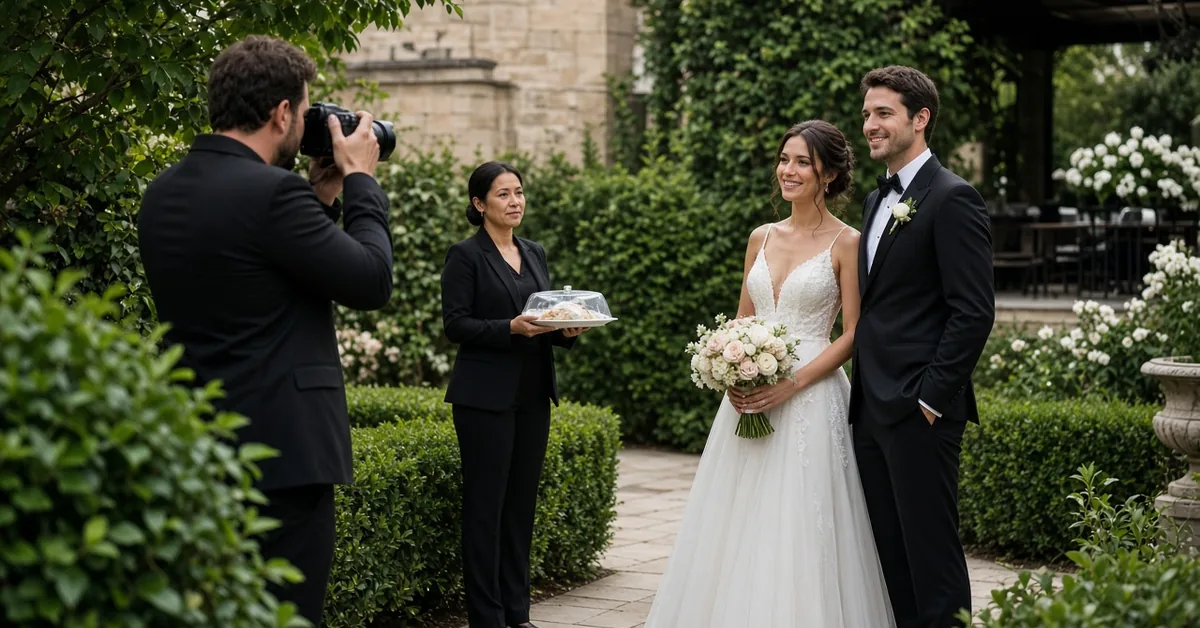
Use a schedule that shows every handover
The example below assumes a lunch reception with buffet service beginning at 1 pm. These are illustrative timings; confirm the meal, dressing and service windows with your team.
| Time | Bride and groom’s activity | Team instruction |
|---|---|---|
| 1:00–1:15 pm | Essential family photographs | Helper gathers the agreed groups |
| 1:15–1:20 pm | Move to the meal area and settle | Coordinator confirms readiness with catering staff |
| 1:20–1:45 pm | Sit down and eat | Pause photographs and guest requests |
| 1:45–2:15 pm | Change outfits and refresh makeup | Dresser follows the agreed change allowance |
| 2:15–2:25 pm | Return and prepare for the next entrance | Coordinator checks both partners are ready |
Notice that the meal and outfit change have separate allocations. If your change takes longer, extend it and move the next activity rather than expecting both tasks to fit.
Keep delayed meals under the caterer’s control
Ask the catering team to manage holding and serving until you are ready. A plate left in an air-conditioned bridal room is not refrigerated, and covering it does not provide temperature control.
Singapore food-safety guidance advises keeping hot food above 60°C and cold food below 5°C. Follow the caterer’s stated consume-by time; do not calculate a new allowance from when someone brings the plate to your room.
If photographs run late, have the coordinator check whether the planned food can still be served safely. Where necessary, discuss a freshly prepared alternative in advance.
Do not make taking buffet leftovers back to the hotel your fallback meal plan. Any later meal needs its own agreed preparation, storage and serving arrangements.
Give one person responsibility for the meal
Choose a coordinator, sibling or trusted friend who will be available during the break. Give them the serving location, timing, catering contact and permission to redirect interruptions.
Their job is to confirm that both partners are ready, request service and tell the photographer and dresser when the meal ends. Avoid choosing someone who must appear in every family photograph.
Agree on a delay plan before the wedding. If photographs overrun, move an optional group or shorten a later activity. For a longer unavoidable delay, keep a suitable packaged snack available and rearrange the main meal with the catering team.
When you contact Rasa Catering, share the couple’s meal time alongside the guest service time. Ask for written confirmation of portions, delivery location, holding arrangements, charges and the latest feasible serving time. That gives everyone a clear plan for getting the bride and groom fed between their wedding commitments.
Frequently Asked Questions
How much time should we allow for our meal?
Set aside 20–30 seated minutes, plus time for serving and touch-ups.
Should we eat before changing outfits?
Usually, yes. Eat before the next outfit and final makeup touch-ups, if comfortable.
Can our caterer reserve two meals?
Confirm portions, safe holding, serving time and any extra charges in advance.
Who should coordinate our meal?
Choose one available coordinator or trusted helper to arrange service and prevent interruptions.
What if photographs run late?
Move optional photos and confirm a safe revised serving time with the caterer.