
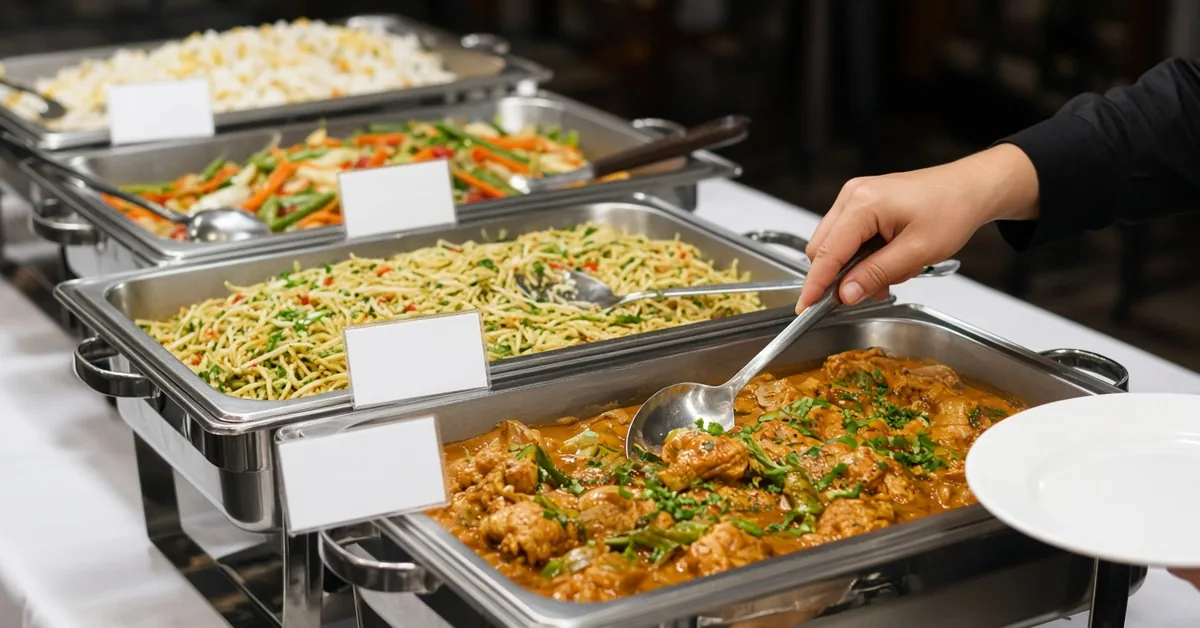
Before taking a serving, check the dish name, allergen information, dietary suitability and any instructions beside the tray. If you have a food allergy, confirm the ingredients and preparation arrangements with the catering team before eating, even when a label looks reassuring.
At a Singapore buffet, dishes may come with marinades, gravies, garnishes and separate dips. The name on the card cannot explain every ingredient. Whether you are attending a wedding or choosing from a buffet catering menu, knowing what to check helps you make an informed choice before food reaches your plate.
Start with the dish name and main ingredients
A useful buffet label identifies the dish clearly enough to distinguish it from neighbouring trays. Look for the main protein, cooking style and accompanying sauce. “Chicken curry” gives more information than “Chef’s Special”, while naming a peanut sauce highlights an ingredient that might otherwise be overlooked.
Check that the card actually belongs to the tray in front of you. If a label says chicken but the food appears to be fish, ask the attendant to confirm it before serving yourself. Cards can become misplaced when dishes are moved or replaced.
For unfamiliar dishes, ask for a plain-language explanation. A description such as “beef cooked in a spiced gravy” is more useful than trying to identify the meat by appearance.
Read the card again when returning for seconds if the tray has been replaced. A replacement dish may have a different sauce or garnish. If the food has changed but the card has not, wait for staff to clarify the information.
Look beyond the obvious ingredients
Allergens can be present in components that are difficult to see. Pay particular attention to sauces, coatings, stocks and toppings. Common ingredients worth asking about include:
- Milk in butter, cream, cheese and yoghurt-based sauces.
- Egg in mayonnaise, batter and some noodles.
- Peanuts or tree nuts in dressings, garnishes and curry pastes.
- Fish or prawns in sauces, stock and shrimp paste.
- Soya and, depending on the product, wheat in soy sauce.
These are examples, not a complete allergen list. Tell staff the exact ingredient you need to avoid, including allergies outside these examples.
Rasa Catering’s Western buffet menu includes Buttered Vegetables with Toasted Almonds. That name flags butter and almonds, but a full allergen check still requires the actual recipe. A vegetable dish should never automatically be treated as suitable for every dietary need.
Check separate condiments too. Information for a main dish may not cover the dressing or dip beside it. Removing a visible garnish after serving does not reliably remove an allergen from the food.
Mixed dessert platters deserve the same attention. An “assorted desserts” label does not tell you which piece contains egg, milk or nuts. Ask staff to identify each item and explain whether the pieces have shared a tray or serving utensil before choosing one.
Understand what dietary labels actually tell you
| Label | What guests should check |
|---|---|
| Vegetarian | Whether the dish includes milk or eggs, and whether its stock and sauces match your requirements. |
| Vegan | Animal ingredients should be excluded, but allergen cross-contact still needs checking. |
| Dairy-free | This concerns dairy; it does not establish suitability for someone avoiding eggs, soya or nuts. |
| Gluten-free | Confirm the sauces, coatings and preparation arrangements, especially if you have coeliac disease. |
| Halal | This concerns religious dietary suitability; it does not mean the dish is vegetarian or free from allergens. |
Read the buffet’s symbol key before interpreting letters or icons. A green leaf or the letter “V” can be unclear without an explanation. Dietary terms answer different questions:For example, the North Indian buffet menu lists paneer tikka and raita within vegetarian categories. Paneer and yoghurt are dairy ingredients, so “vegetarian” does not answer a milk-allergy question.
If an abbreviation is unexplained, ask staff rather than assigning it a meaning yourself.
Take contains and may contain statements seriously
“Contains” identifies an allergen present as an ingredient. “May contain” warns that an allergen could be present unintentionally, for example through shared equipment or handling. It should not be read as permission to try a small portion.
An absent warning is also not a guarantee of absence. Singapore’s general food-labelling requirements apply to prepacked foods; freshly catered buffet dishes fall into a different category. Guidance for non-prepacked food encourages businesses to provide information such as allergens when customers ask.
If a card only names the dish, request ingredient information. Do not assume that every relevant allergen would necessarily be printed underneath it.
Check the serving utensils as well
Labels describe the food, but what happens at the buffet matters too. Allergen cross-contact occurs when an allergen transfers to another food, potentially through a shared spoon, tongs or a spill.
Keep each utensil with its own dish. Avoid using the rice spoon for curry or moving tongs between bread and other foods. If a utensil is missing, request a replacement.
If you see a spoon being swapped between trays, tell the attendant. Changing the spoon does not undo contact that has already occurred. Guests with allergies should ask whether a separately prepared portion with appropriate controls is available, rather than assuming food from another part of the tray will be suitable.
Read spice information and serving notes
A chilli symbol usually describes heat, but check the legend for the scale being used. “Mild” is subjective, and a dish without a chilli icon is not necessarily free from chilli or pepper.
Ask whether heat comes from the main dish, a garnish or a separate sauce. This is helpful when serving children or guests who prefer less spice. Labels should also make practical details clear where relevant, such as bone-in chicken or prawns served with shells. If this information is missing, check before plating food for someone else.
Find the consume by time
Look for the buffet’s time-stamp sign as well as individual dish cards. The “consume by” time tells guests when the catered food should be eaten by. It may appear on a shared sign for the buffet table.
Follow the stated deadline. Do not calculate a fresh four-hour window from the moment you arrive: preparation, transport and setup can already account for part of the food’s time outside controlled temperatures.
Food should not be eaten after the displayed deadline simply because it still looks appealing or sits over a warmer. If the sign is missing or unclear, ask the organiser or catering team before helping yourself.
Ask specific questions before taking a serving
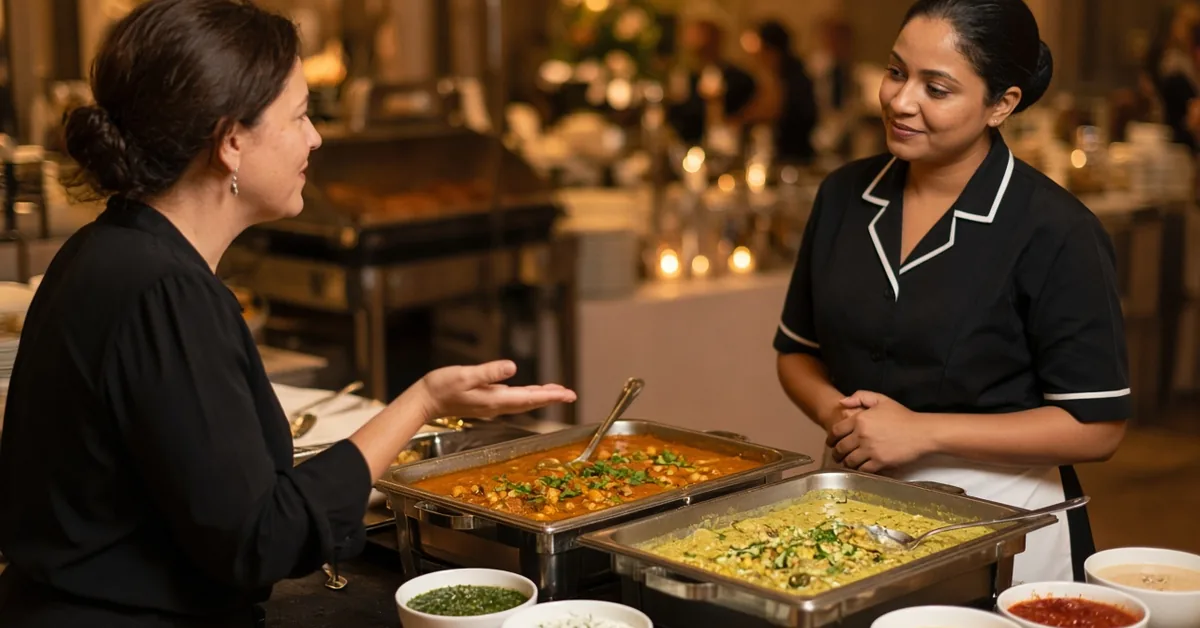
If you have an allergy, tell the person responsible for food service directly. “Does this contain peanuts, including the sauce and garnish?” gives staff a clearer question to check than “Is this safe?” Follow up about shared preparation equipment and serving utensils.
Give the team time to check the recipe or ingredient packaging. If they cannot confirm the details, leave that dish and ask about a suitable alternative. Do not taste it to test your reaction.
For event organisers, collect dietary requirements before confirming the menu and contact Rasa Catering to discuss ingredient information, dish labels and any special meal arrangements. Confirm what can be accommodated before promising guests a suitable option. Clear information before the event makes questions at the buffet easier to resolve.
Frequently asked questions
What should buffet labels show?
Dish names, allergens, dietary suitability and relevant serving instructions.
Are vegetarian dishes dairy-free?
No. They may contain milk, butter, cheese or yoghurt.
Does halal mean allergen-free?
No. Halal dishes may contain common allergens.
What does ‘may contain’ mean?
It warns of possible unintended allergen presence.
What if a label is missing?
Ask catering staff to confirm ingredients before serving yourself.