
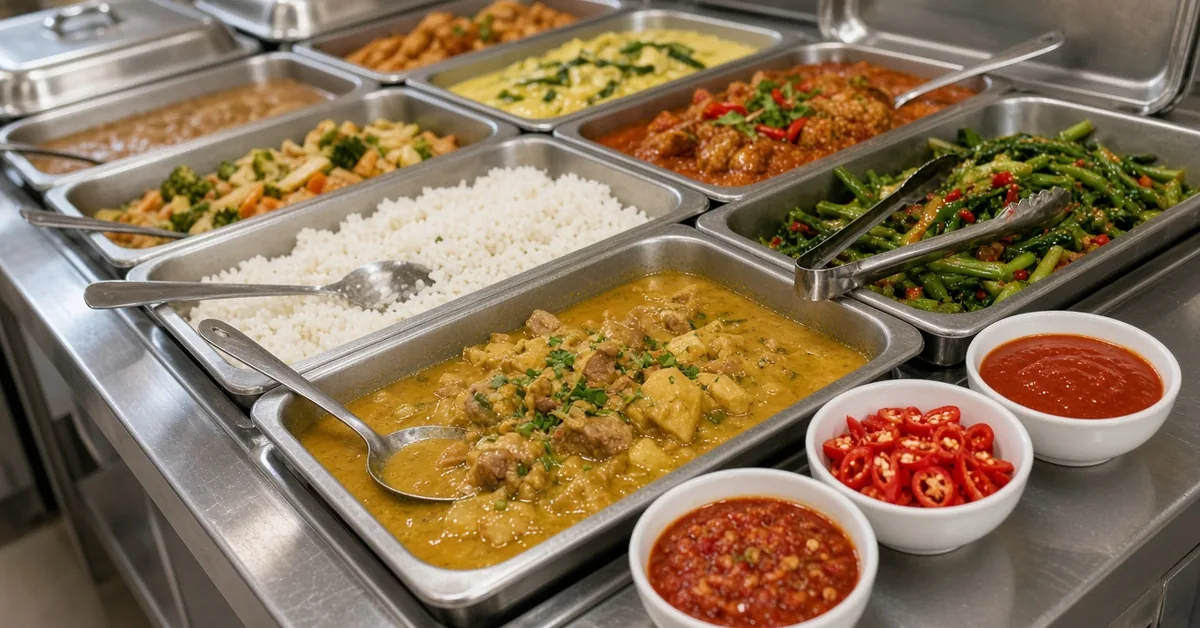
Plan a buffet for different spice preferences by making sure guests can build a satisfying mild meal, then offering hotter dishes and separate chilli condiments for those who want them. The balance matters across the whole plate: mild rice is little help if every protein and vegetable comes in a fiery sauce.
For an office lunch, wedding reception or family gathering in Singapore, start with guest preferences and check the actual recipes before choosing your final menu.
Ask about heat preferences before selecting dishes
Add a short question to your RSVP or meal survey: “Which spice level would you comfortably eat for a full meal?” Offer four answers:
- No chilli.
- Mild.
- Medium.
- Hot.
Ask separately about allergies and dietary requirements. Someone who enjoys spicy food may still need a vegetarian meal or have an ingredient allergy.
Avoid guessing preferences from a guest’s age, nationality or background. Research on chilli consumption shows that people can experience different levels of burning from the same stimulus. A host’s idea of “a little spicy” may therefore be uncomfortable for someone else.
If you cannot survey everyone, ask a few representatives of the group and keep a complete mild meal available.
Make the mild choices work as a complete meal
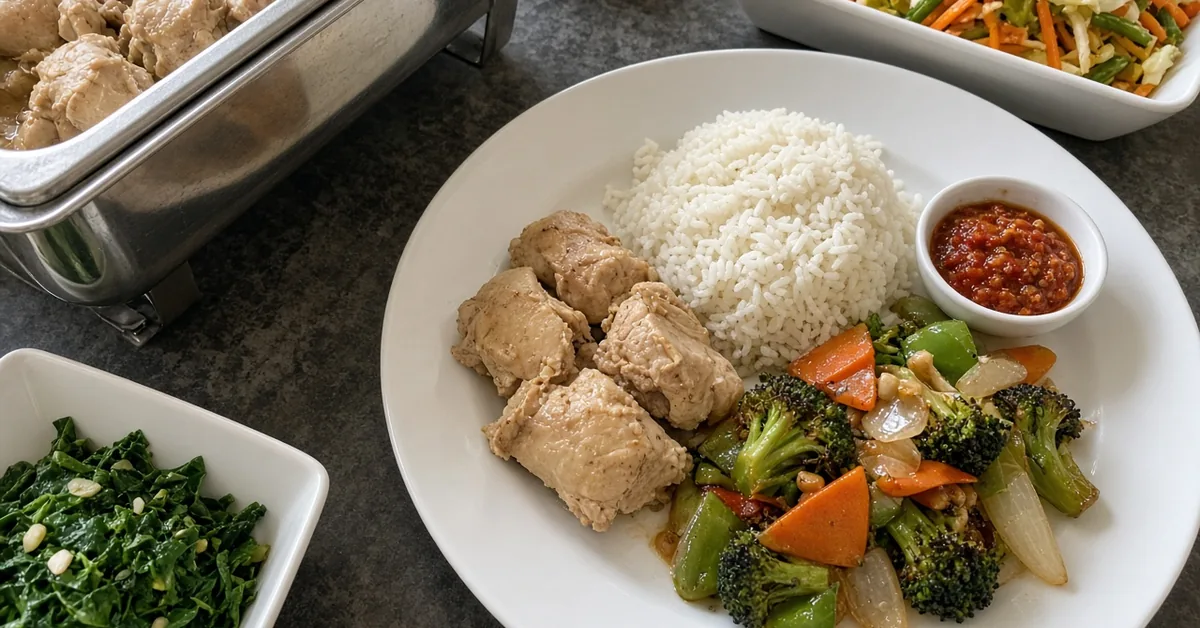
Before adding your favourite spicy dishes, identify a suitable staple, protein and vegetable for guests who avoid chilli. Check that these choices also work together: rice, a main dish and vegetables should feel like an intentional meal.
Keep flavour through ingredients such as garlic, herbs, ginger or citrus, according to what guests find comfortable. “Mild” still needs clarification because black pepper or a generous amount of ginger can feel intense to some people.
Then review overlapping requirements. If the only mild main contains meat and your vegetarian dish is hot, a vegetarian guest who avoids chilli has no suitable main course. Ask whether the caterer can provide an appropriate alternative and whether it affects the package price.
Use the menu as a shortlist and confirm each recipe
Browse the buffet catering menus with the meal structure in mind. Cuisine names alone do not tell you how much chilli appears in a particular dish.
For example, Rasa Catering’s Chinese buffet menu lists Deep Fried Chicken with Lemon Sauce, Stir Fried Fish with Ginger & Spring Onion, and Garlic Glazed Broccoli. These are useful options to discuss when building a milder selection, but their names do not guarantee a chilli-free recipe. Check the marinade, sauce and garnish.
The Malay and Nasi Padang buffet menu includes Nasi Putih alongside dishes such as Ayam Lemak Chilli Padi and Ikan Asam Pedas. If choosing those mains, confirm their heat and arrange another suitable protein for guests avoiding chilli.
The Western selection also needs checking: pasta, peppercorn sauces and Cajun seasoning can introduce heat. Ask which dishes can accommodate your requirements. Confirm any substitutions, additional dishes or combinations across menus before treating them as part of your order.
Keep extra heat separate where the recipe allows
Separate sambal, sliced chilli or chilli sauce can give guests more control over otherwise mild dishes. Ask which condiments the caterer can supply and how they will be labelled.
This works best when the heat is an optional addition. Chilli already cooked into a curry paste, marinade or gravy cannot be removed by leaving off the garnish. If the main dish depends on that preparation, keep it as a spicy choice and select a different mild dish.
Place condiments in clearly marked containers with their own spoons. Small sauce bowls let guests try a little before adding more to their plate.
You can still include a distinctive hot dish for chilli lovers. Serving it alongside a complete mild selection gives both groups a meal they can enjoy.
Plan portions around shared demand
Do not order mild food only for the guests who selected “no chilli.” People who enjoy spicy food may also choose lemon chicken, vegetables or a familiar rice dish.
Suppose you expect 60 guests and 15 avoid chilli. Providing exactly 15 portions of the only mild protein could leave those guests without enough once everyone starts serving themselves. Explain this overlap to the caterer and ask how quantities are allocated across the package.
Use the RSVP results to discuss the balance between mild and hotter mains. A fixed percentage split is less useful than knowing which dishes most guests are likely to take.
Also check whether two heat versions count as two menu selections, require separate minimum quantities or cost extra. A shared mild main with optional chilli may fit the budget more easily.
Label the food in language guests understand
Agree the heat descriptions with the kitchen before printing buffet cards. Use consistent wording, such as “no added chilli,” “mild,” “medium” and “hot,” and explain that the ratings are a guide.
A chilli icon can help guests scan the spread, but pair it with words. For a pepper-heavy dish, add “peppery” rather than relying solely on a chilli rating. Label optional sauces clearly so guests know whether heat is in the dish itself or served separately.
Keep allergen information distinct from spice descriptions. Mild food can still contain ingredients such as shellfish, peanuts, milk or eggs. Ask the caterer to confirm ingredients and cross-contact precautions for guests with allergies; a mild label does not establish suitability.
If a dish changes before delivery, update its card. An accurate label must describe the food actually being served.
Arrange the buffet to make choices easy
Place the staple and confirmed mild dishes where guests can identify them before reaching the hotter options. Keep chilli condiments in a separate, clearly marked area so guests do not have to reach across mild food.
Give every dish its own serving utensil and provide somewhere for each utensil to rest. Position sauces so spills are unlikely to land in neighbouring trays.
Brief the person overseeing the buffet on which dishes contain chilli and where ingredient information is available. They should check with the caterer whenever they are unsure.
During service, watch the mild mains as closely as the popular spicy dishes. Replenishing rice alone will not help if the only suitable protein has run out.
Confirm the final spice brief in writing
Before approving the order, send the caterer a short summary covering:
- Guest numbers and the reported spice preferences.
- The dishes intended to form a mild meal.
- Chilli restrictions in sauces, marinades and garnishes.
- Hot dishes and separately served condiments.
- Portions, labels and any agreed substitutions.
- Dietary requirements and ingredient checks.
Ask for confirmation of what is possible and any additional charges. If a tasting is available, include someone who prefers mild food so the decision reflects more than the organiser’s tolerance. Taste the sauce and garnish with the main ingredient, then record the agreed preparation. Ask whether the event batch will follow that recipe, and who will be told about the changes.
When you contact Rasa Catering, share this brief alongside your preferred package. Clear instructions give the kitchen a practical basis for confirming a buffet where guests can choose their own comfortable level of heat.
Frequently Asked Questions
Can one buffet suit different spice preferences?
Yes. Offer a complete mild meal, with hotter dishes and chilli condiments separately.
Does mild mean chilli-free?
No. Confirm the ingredients in sauces, marinades and garnishes.
Can chilli be served separately?
Ask the caterer. Chilli already cooked into a dish cannot be removed.
How should spice levels be labelled?
Use clear words such as mild, medium and hot, confirmed by the kitchen.
How much mild food should I order?
Allow for guests who enjoy spicy food choosing mild dishes too.