

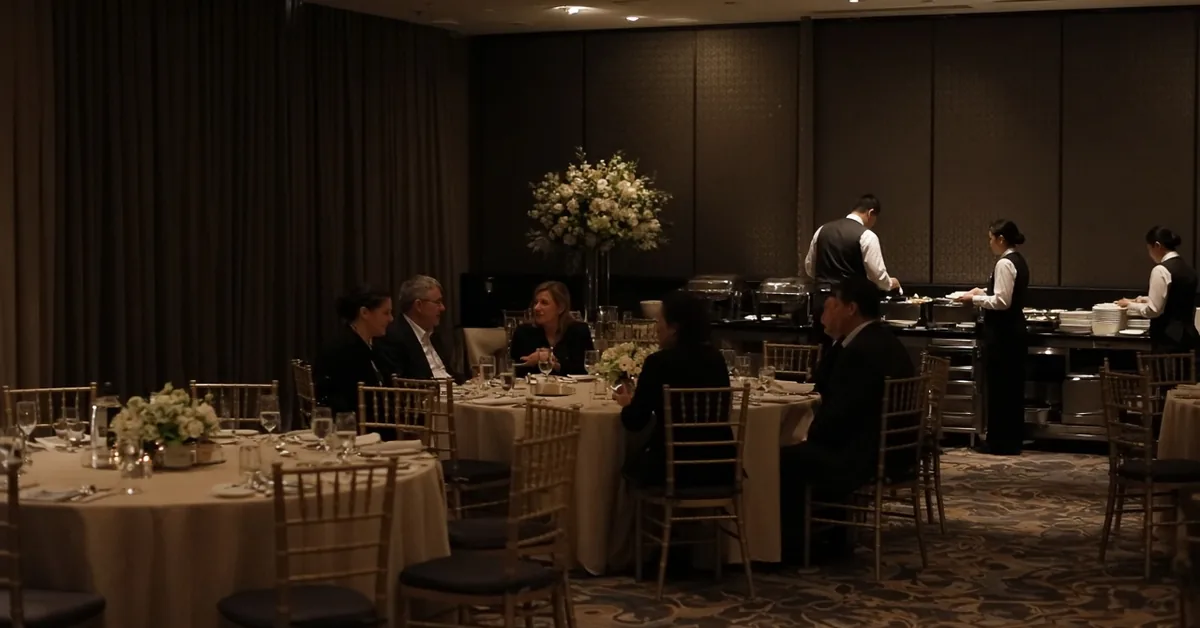
If your event runs late, you may face extra venue charges, additional supplier costs or a firm instruction to finish. The outcome depends on your booking terms, whether an extension is available and when the space must be handed back. Paying more does not automatically give you permission to stay.
Before choosing from Rasa Catering’s event venues in Singapore, confirm what happens when the programme slips. The most useful questions concern the charging trigger, approval process and final clearance deadline. Resolve these before booking, while you can still adjust the schedule and budget.
Confirm which deadline starts overtime
An event finishing at 10 pm does not necessarily mean everyone can remain until 10 pm and begin packing afterwards. Ask for separate times for:
- Guest activities and entertainment to end.
- Guests to leave the room.
- Suppliers to finish dismantling and collection.
- The organiser to complete the venue handover.
Establish whether setup and teardown sit within the paid hire period or have separate access windows. Also confirm whether the foyer, preparation room and loading area follow the same schedule.
For example, if your hire ends at 10 pm and suppliers need 45 minutes to clear, a 10 pm farewell leaves no clearance allowance. Work backwards from the required handover time, using estimates from the people doing the packing. Record what counts as completed handover, including rubbish removal, furniture arrangements and equipment collection.
Check how extra time is calculated
Ask whether overtime is charged by the minute, half-hour, full hour or another minimum block. The wording “per hour or part thereof” matters: under that arrangement, a 20-minute overrun could attract a full hour’s charge.
Request a written calculation for a short delay and a longer one. Confirm whether different rates apply after a particular hour, on certain dates or outside normal operating hours. Check whether quoted figures include applicable GST and any service charge.
If a grace period is offered, clarify its purpose. Is it free time for guests to depart, or only for the final inspection? Does exceeding it trigger charges from the original deadline or from the end of the grace period? Avoid budgeting around an informal promise that “a few minutes should be fine”.
Establish whether an extension is possible
An overtime rate is not a guarantee that the room will remain available. Another booking, building closing arrangements or restrictions on entertainment may prevent an extension.
Ask for the latest permitted finish and whether music, guest occupancy and dismantling have different cutoffs. A later collection window may not permit a longer reception.
Confirm who can approve extra time and when requests must reach them. You need a named contact or duty role available during the event, together with the accepted confirmation method. Ask whether booking additional time beforehand has different prices or conditions from requesting it on the night. If approval is refused, the programme needs a workable shorter version.
Identify charges beyond room hire
Request an itemised explanation of what the extension fee includes. Depending on the booking, additional costs could involve air-conditioning, security, cleaning, technical support or venue staff.
Check outside suppliers separately. An extended venue booking does not automatically extend a photographer’s coverage, an emcee’s working hours or a collection vehicle’s waiting time. Each agreement needs its own deadline and rate.
Ask whether extra services are compulsory when the room stays open and whether they have minimum booking blocks. Otherwise, a modest room extension could bring several separate charges. Agree who may authorise these costs, especially for a company event where the person on site may have a limited spending allowance.

Keep catering timing separate from venue timing
Food service needs its own plan when speeches, ceremonies or presentations run late. Confirm the serving window, clearance arrangements and who must be notified if the meal timing changes.
Rasa Catering’s published timing information states that food is set up 30 minutes to one hour before the event and that its team comes for clearance three hours from the stated event time. Its order information also says timing amendments must be finalised at least one week before the event. Confirm how these arrangements apply to your selected package.
A room extension should never be treated as permission to keep a buffet available indefinitely. For a reception, discuss the wedding catering arrangements alongside the programme, particularly where photos or outfit changes might delay dining. Ask about any revised service plan before assuming collection can move.
Clarify responsibility and the final bill
Ask how the contract handles delays caused by late guest arrivals, supplier access problems or the venue being unavailable at the agreed start. A late start should not be assumed to move the finishing time automatically.
If an access problem occurs, record the time and notify the venue representative immediately. Agree any revised arrangements in writing while the facts are clear.
Confirm whether overtime is invoiced separately or deducted from a refundable security deposit. If deductions are permitted, ask for an itemised statement, the remaining deposit’s return date and the process for querying a charge. Keep the agreed extension, actual handover time and relevant messages together.
Decide what to do as soon as delays appear
Give one organiser responsibility for watching the schedule and speaking to the venue. That person should know the approved spending limit and which programme elements can be shortened.
When a delay becomes likely:
- Estimate the revised finish, including clearance time.
- Check whether an extension is available and obtain the full additional cost.
- Confirm approval before telling guests or suppliers that the event will continue.
- Update catering, transport and other affected teams.
- Record the revised deadlines and complete handover with the venue representative.
If more time is unavailable, shorten optional speeches, reduce repeated photo combinations or close informal networking earlier. Protect essential activities and allow guests enough time to leave comfortably. Do not try to recover every lost minute by rushing suppliers through teardown; their access and clearance requirements still need to be met.
Frequently asked questions
Is venue overtime automatically charged if we finish late?
It depends on the agreement. Charges may begin when the booked period ends or when a specified handover deadline is missed. Confirm the trigger and any grace period in writing.
Can we pay for extra time on the day?
Only if the venue approves it and the necessary facilities and staff remain available. Obtain permission before extending the programme.
Does overtime apply after all guests have left?
It can if suppliers are still clearing equipment beyond the agreed access period. Ask whether teardown time is included and when the venue considers handover complete.
What if only a few guests are still chatting?
Check whether remaining guests count as continued occupancy. Assign someone to guide departures before the deadline, particularly when guests are waiting for transport.
What should an overtime confirmation include?
The approved extension, revised handover time, charging unit, total additional cost, included services and approving representative. Keep it with the original booking terms.