

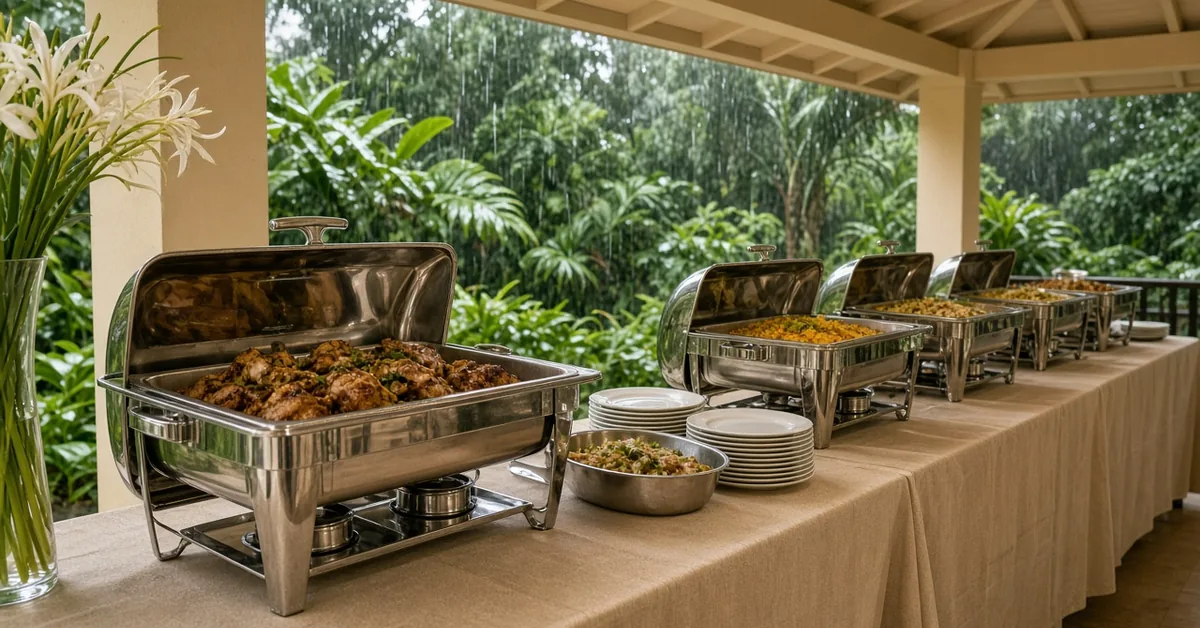
A useful backup serving area must be ready before rain reaches the buffet. Reserve a suitable space, plan the guest route, confirm the equipment and decide who can authorise the change. Waiting until plates, cables and table linen are wet makes the move harder and can interrupt food service.
Singapore receives rain throughout the year, with generally higher rainfall from November to January. A backup therefore belongs in every outdoor event plan. When arranging outdoor catering in Singapore, discuss the alternative serving location alongside the main layout, rather than leaving it for delivery day.
Reserve a space that can handle the whole meal
Ask the venue to identify the exact room or covered area available if conditions change. Confirm that it is reserved for your event, accessible before delivery and available until catering clearance finishes. A nearby function room is of little help if another group has booked it during lunch.
Check whether the space can accommodate the buffet, guests waiting to be served, staff replenishing dishes and somewhere sheltered to eat. Its advertised standing capacity may not reflect the space needed once tables and equipment are installed.
Walk through the location with these questions:
- Can guests reach it without crossing an exposed lawn or slippery steps?
- Is there a step-free route for wheelchair users and guests with pushchairs?
- Can catering trolleys fit through the doors and use the available lift?
- Are toilets and handwashing facilities accessible from the backup area?
Get any room hire, cleaning or access charges confirmed in writing.
Check protection from sideways rain and thunderstorms
A roof alone does not make an area suitable for serving food. Visit open-sided spaces and check where wind could drive rain onto dishes, plates or electrical equipment. Look for roof leaks, overflowing gutters and low spots where water collects.
Place serving tables well back from exposed edges and away from roof runoff. Ask the venue or appointed supplier about suitable weather protection; avoid improvising with loose sheets that could blow into hot equipment or obstruct exits.
Make a separate provision for thunderstorms. An ordinary canopy or marquee should not be assumed to provide lightning protection. Identify a substantial enclosed building where guests and staff can shelter safely. If that building cannot support food service, agree beforehand that serving will pause while everyone takes shelter.
Draw the backup layout around guest movement
Sketch the alternative arrangement before confirming the table count. Include the buffet, drinks, queue, staff access, waste bins and dining area. Keep doors, emergency exits and accessible routes clear.
Position plates at the start of the buffet and cutlery where guests can collect it without reaching across hot trays. Put drinks on a separate table when space permits, so someone filling several cups does not hold up the food queue.
Allow staff to replenish dishes without pushing through waiting guests. For a smaller room, discuss whether a shorter buffet with more frequent replenishment would work better than duplicating the outdoor display.
Keep wet umbrellas away from the serving tables. Use secured, non-slip entrance mats and arrange prompt cleaning of wet floors. Any queue management should keep guests inside the approved sheltered space.
Confirm that the equipment works in both locations
Send the caterer photographs, measurements and a floor plan of the backup area. Show the available sockets, delivery entrance, lift and route between locations. When reviewing the buffet catering menus, also discuss the space and equipment each service arrangement needs.
Ask the venue and catering team to confirm:
- Which tables, warmers and service items will already be in the backup area.
- Whether the electrical supply can support the proposed equipment.
- How cables and connections will stay dry and clear of walkways.
- Whether the room permits the planned warming fuel or cooking equipment.
A live cooking station may need a different arrangement indoors because of ventilation, heat or flame restrictions. Agree on an approved alternative before the event. Never relocate outdoor cooking equipment into an enclosed room without checking its suitability.
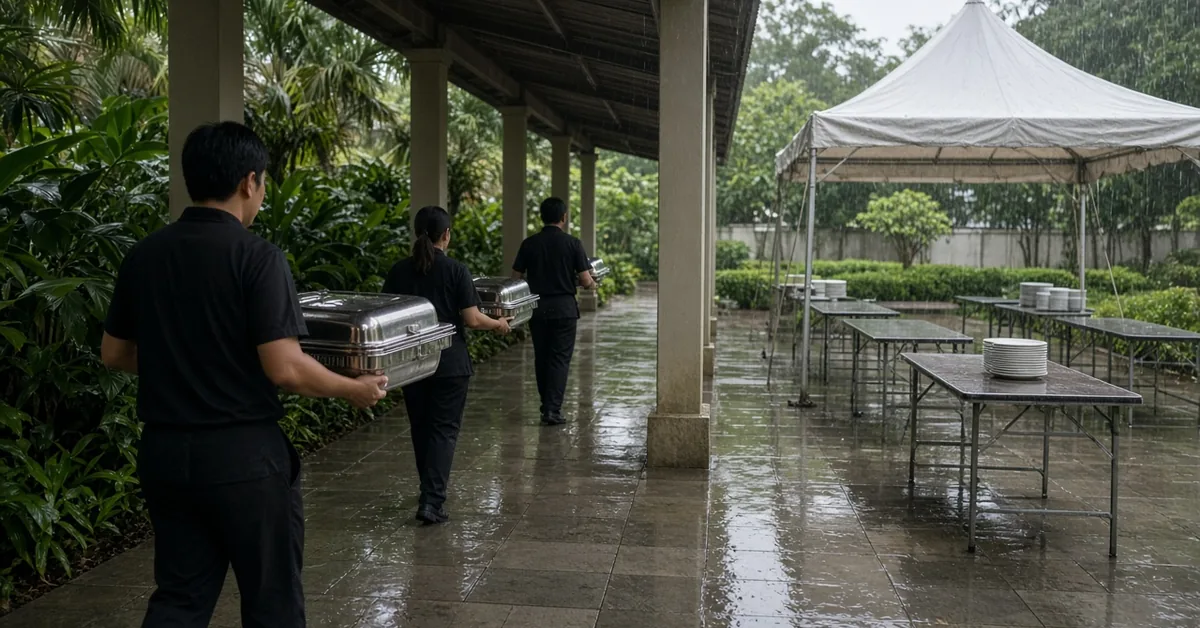
Protect food temperatures and the original serving deadline
Rain delays do not restart the food safety clock. Keep the caterer’s consume-by information visible and follow the stated deadline even if the buffet moves or guests arrive late.
The backup area needs appropriate temperature control, not simply table space. Ask how hot food will be held at 60°C or higher and cold food below 5°C where temperature-controlled holding is used. Staff should check actual food temperatures; the presence of a warmer alone does not establish that food is being held safely.
Keep spare food in suitable controlled storage and replenish in manageable quantities. An air-conditioned room is not a substitute for refrigeration.
Rasa Catering’s outdoor catering page currently states that food should be consumed within its three-hour event service period. Confirm the timing for your booking and follow any earlier consume-by deadline supplied with the food. Do not extend service because rain has delayed the programme.
Set an early decision point and name the person responsible
Choose one organiser to coordinate the weather decision with the venue and caterer. That person should monitor local forecasts and warnings, communicate changes and ensure staff receive one clear instruction.
Check the forecast on the event morning and again before setup. Continue monitoring during the event, using the local two-hour forecast, rain radar, venue alerts and conditions on site.
Agree on practical triggers for moving service: approaching severe weather, rain reaching the serving area, unsafe pooling water or instructions from the venue. Thunder or a lightning alert requires prompt sheltering; do not wait for heavy rain.
If poor weather is likely before delivery, ask whether the buffet can be set up directly in the backup area. This avoids handling an already assembled spread twice.
Prepare the move before guests need it
Allocate responsibilities in advance. One person guides guests, the catering team manages food and equipment, and venue staff prepare the route and room. Brief the emcee or host on a short announcement explaining where guests should go.
For a precautionary move while conditions remain safe, have the catering team cover food, use suitable containers and trolleys, and handle heating equipment according to its operating instructions. Keep dish labels and serving utensils with their corresponding food. Do not serve food exposed to rainwater, dirty splashes or runoff; ask the catering team to discard affected items.
Once a thunderstorm creates an immediate danger, people take priority. Do not send staff back into exposed areas to retrieve decorations or trays. Resume service only when conditions, food safety and the venue’s safety procedures allow it.
Put the backup arrangement into the booking brief
Before confirming the event, record the backup location, access times, layout, equipment, responsible contacts and agreed charges in one brief. Include who supplies extra tables, floor protection and any additional staff, plus what happens if service must pause.
FAQs
Is a tent enough for rainy weather?
It may block rain, but an ordinary tent is not a safe lightning shelter.
When should we switch to the backup area?
Move early when conditions threaten safe service; follow venue alerts.
Can a rain delay extend buffet serving time?
No. Always follow the caterer’s original consume-by deadline.
Does the backup area need electricity?
Confirm power requirements for the selected warming, cooling and cooking equipment.
Should guests queue under cover?
Yes. Keep the serving queue and route to dining areas sheltered.