

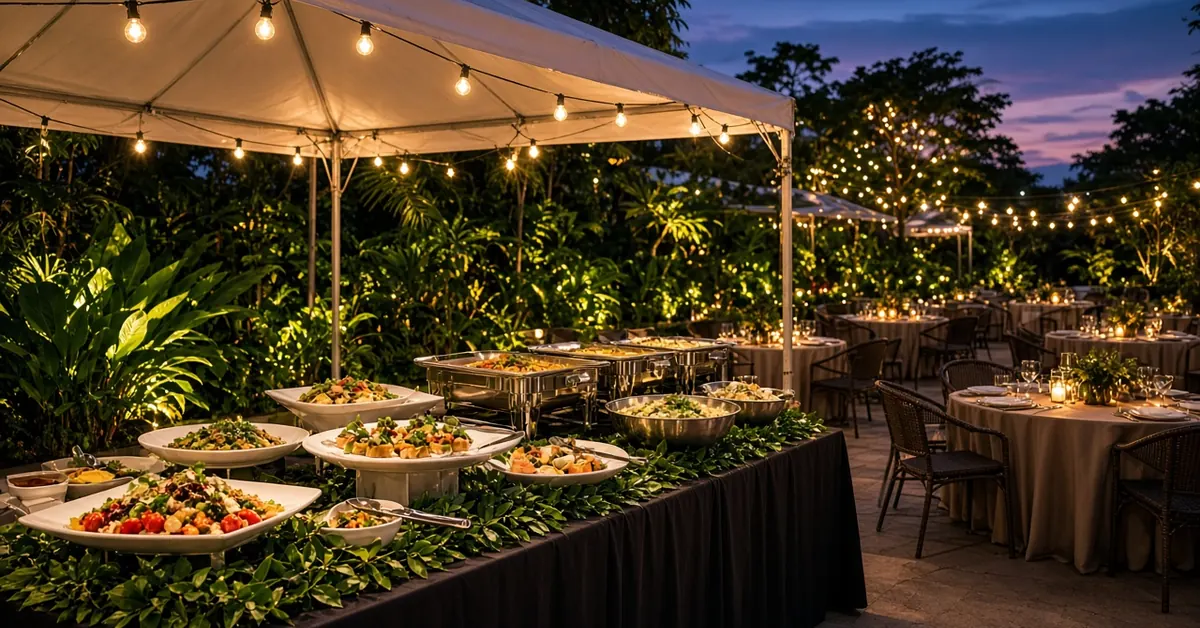
For an outdoor evening event, give food stations clear, even lighting, keep dining tables softly illuminated, and light the routes connecting them. Guests should be able to read a dish label, serve themselves and find their seats without using a phone torch. Decorative lights can create atmosphere, but each practical task needs enough light of its own.
When planning outdoor catering in Singapore, agree on the lighting layout alongside the buffet position and seating plan. That prevents a beautifully dressed food station from ending up in the darkest corner after sunset.
Start with the evening layout
Visit the venue after dark, ideally around your planned serving time. Daylight photographs will not show whether a pavilion light reaches the buffet or whether trees block light from nearby buildings.
Mark the food counters, drinks station, dining tables, staff access and guest walkways on one plan. Include steps, ramps and the route to the toilets. For each area, decide what people need to see before choosing fittings.
If you are still comparing event venues, ask which outdoor lights remain on throughout your booking and whether you can adjust them. Confirm approved fixing points and power access before hiring additional lighting.
Put useful light across the whole food station
Position buffet lights above and slightly in front of the serving surface, then adjust them with someone standing where guests will queue. A light directly behind the queue can leave food in shadow as soon as people approach.
For a long counter, use several overlapping pools of light. One bright spotlight in the centre can leave the dishes at either end difficult to see. Check the plate stack, serving utensils and sauces as carefully as the main trays.
Once you have chosen your buffet menu, identify any areas needing extra attention. A soup station needs visible bowl placement and ladle clearance; a drinks counter needs light over cups, dispenser taps and the surface where spills collect.
Live cooking stations also need lighting for the staff’s working area. Ask the caterer where preparation and service happen so guests and staff each have an unobstructed view.
Make labels readable and food colours natural
Use white light over the dishes and their labels. Keep coloured decorative lighting on surrounding features, where it will not change the appearance of food or make printed information harder to read.
Ask the lighting supplier about colour rendering. A colour rendering index, or CRI, of 90 or above is a useful preference for food stations because it helps colours appear more accurately. Brightness alone does not tell you how natural the food will look.
Rasa Catering lists food tags among its buffet setup inclusions. Check their position once the trays are installed: a lid, floral arrangement or serving guest should not block the light reaching them. Use clear, contrasting print and check labels from the normal queue position. Where dietary information is provided, it should be just as readable as the dish name.
Remove glare before adding more brightness
Polished chafing dishes and reflective lids can bounce light into guests’ eyes. Test the buffet with lids open and closed, then change the angle of any fitting that creates a harsh reflection.
A wider beam or diffused fitting may provide a more comfortable result than a concentrated spotlight. Keep exposed bulbs outside the direct sightline of people approaching the counter.
Also check from the staff side. A fitting that looks comfortable to guests may shine towards someone replenishing trays. The aim is usable light on the serving surface, with no need to squint or lean around a shadow.
Keep dining tables warm and comfortable
Warm white lighting around 2700–3000K is a practical starting point for a relaxed dining area. This describes the colour of the light; you still need to adjust its brightness for the table layout.
Use overhead lighting for general coverage, then add shaded table lamps or battery lanterns where plates remain difficult to see. Small decorative lights should support that coverage. A glowing centrepiece alone may leave place settings at the table edges dark.
Set out a complete table before deciding the arrangement. Sit in several chairs and check that guests can see their meal and the person opposite without a lamp shining directly into their eyes.
Keep fittings stable and leave room for shared dishes. For rechargeable lamps, confirm runtime at the chosen brightness, including setup and the final part of the evening.
Light the journey between buffet and table
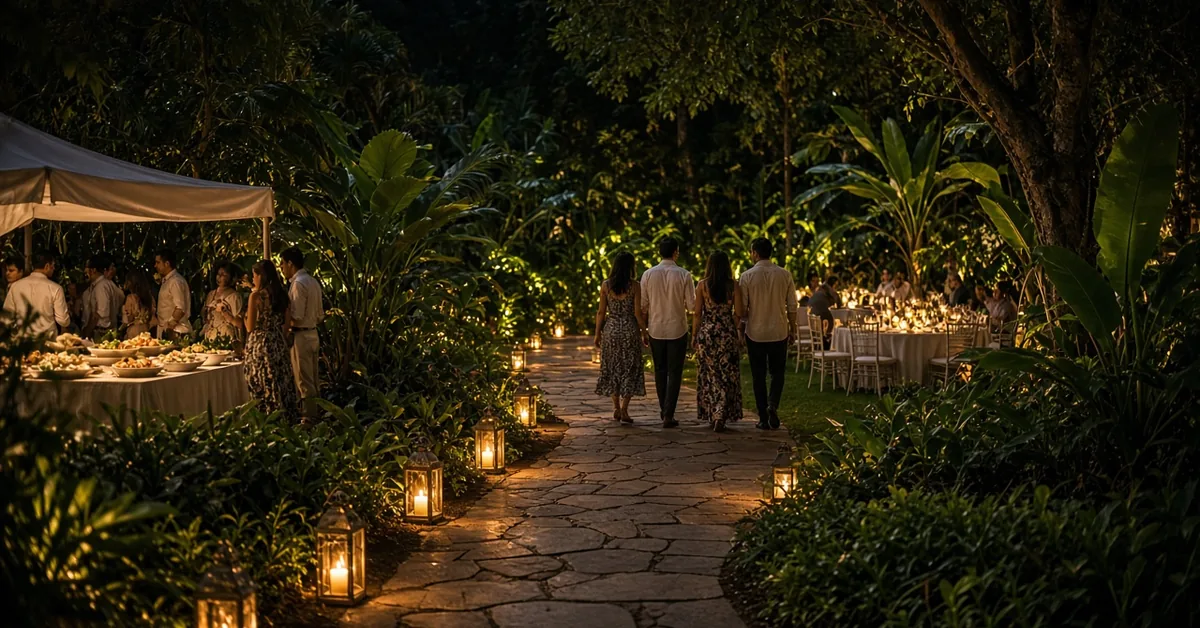
Keep the route between the brighter buffet and softer dining area visibly lit. A sudden change into darkness makes it harder to judge the path while carrying food.
Direct path lighting towards the walking surface and check steps, ramps and changes in ground level. Avoid placing lamps or stands where people turn with plates or pull out chairs. Check the view from a seated height as well as standing height.
Keep entrance and exit signs visible, and maintain the venue’s required emergency lighting. Decorative lighting should never be used as a substitute for the venue’s emergency arrangements.
Prepare lighting for rain and shared power demands
For an outdoor event in Singapore, include the sheltered backup serving area in the lighting plan from the start. It needs enough light for food, labels and guest movement if the layout changes.
Ask the supplier to select equipment and connections suitable for the expected outdoor exposure. A canopy does not automatically protect sockets from windblown rain, splashes or water collecting nearby. Keep electrical connections away from wet areas and have the venue’s electrical contractor confirm appropriate protection.
Share the equipment list, including lights, beverage urns and cooking appliances, so available power can be checked together. Avoid overloaded sockets and improvised adaptor chains; use a licensed electrical worker for electrical installation work.
Route cables outside guest circulation wherever possible. Where a crossing is unavoidable, have the supplier provide suitable cable protection that works with the venue’s access routes. Confirm who will respond if rain affects a fitting or a circuit trips.
Run a final check before guests arrive
Test the finished arrangement after dark with trays, labels, chairs and decorations in place. Walk through as a guest: pick up a plate, read a label, use the drinks station and return to a seat. Ask someone else to stand at the buffet so you can spot shadows caused by the queue.
Before approving the setup, confirm:
- Every dish and label is visible from the serving position.
- Dining tables have enough light to eat comfortably.
- Paths remain clear of dark gaps, cables and lighting stands.
- The sheltered backup area has working lights.
- Lighting stays available through service and pack-down.
Share your floor plan, serving time and rain arrangement when you contact Rasa Catering. Confirm who supplies, installs and controls the lights, and whether any extra hire is needed. Agreeing those responsibilities early gives the catering team a workable setup and lets guests enjoy their meal comfortably after sunset.
FAQs
What lighting works best for food stations?
Use even white lighting that makes dishes, labels and serving utensils clearly visible.
Are fairy lights enough for outdoor dining?
Use them for atmosphere, with additional lighting where guests need to see their plates.
How can buffet glare be reduced?
Angle lights away from reflective lids and check the view from both sides.
Should dining tables be as bright as buffets?
Tables can be softer, provided guests can see their meals and faces comfortably.
When should event lighting be tested?
After dark, with the buffet, seating and decorations in their final positions.